
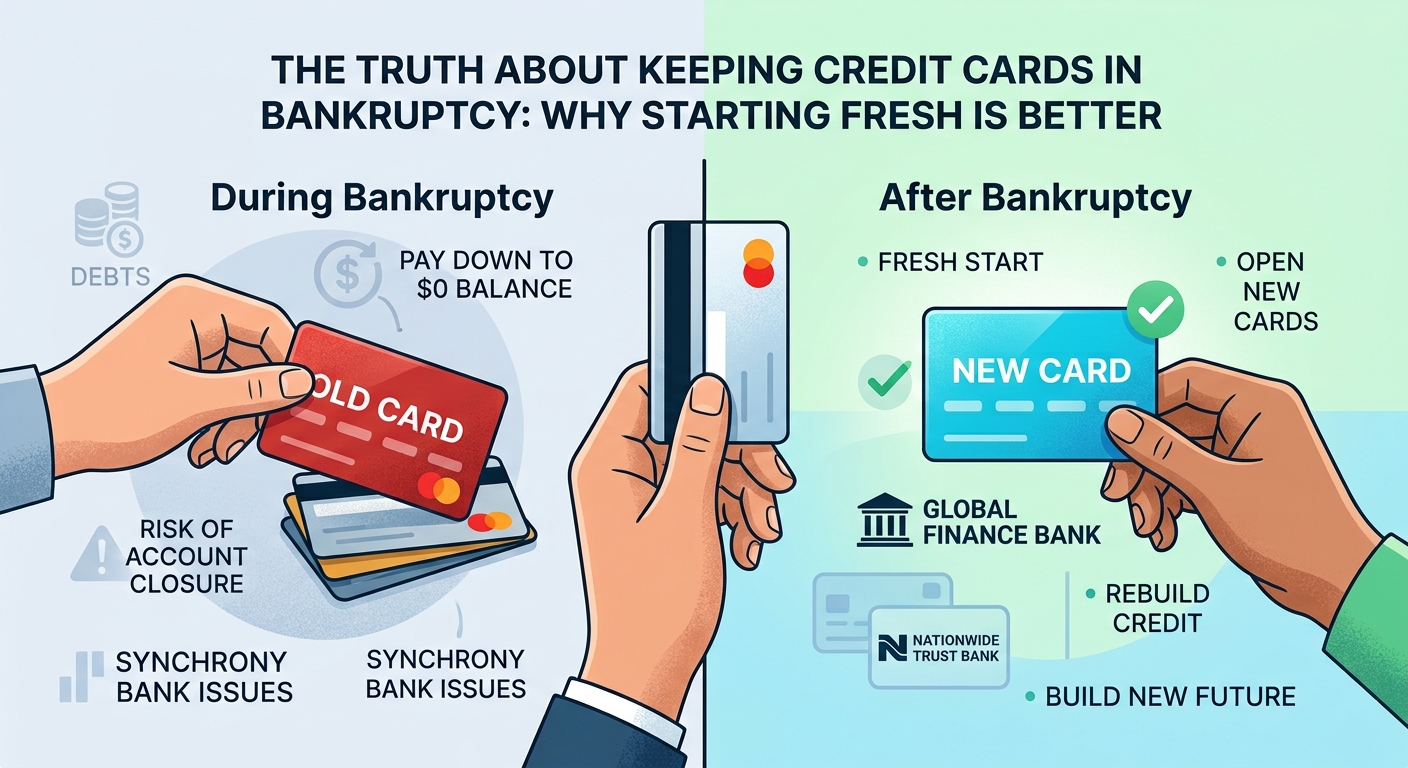
If you’re considering filing for bankruptcy, you might be wondering whether you can keep one or two of your credit cards out of the process. Perhaps you want to maintain a card for emergencies, preserve your relationship with a particular lender, or avoid the inconvenience of having no available credit. While the answer is technically “yes,” the reality is far more complicated than most people expect.
Understanding what happens to your credit cards during bankruptcy—and why opening new accounts afterward is often the better strategy—can help you make informed decisions about your financial future.
You will have access to credit cards for emergencies even in the week after bankruptcy. BUT it’s probably better if those are new cards than trying to keep old cards out of the bankruptcy. Walker and Walker has filed tens of thousands of bankruptcies for people in the Midwest and people are always able to open new cards afterwards.
The Technical Truth: You Can Keep Cards Out of Bankruptcy
Under Bankruptcy Law, you have the legal right to keep credit cards out of your bankruptcy filing, but there’s a significant catch: the balance must be paid down to exactly $0 before you file. The way this works is becuase if there is a $0 balance, then it’s not a debt anymore.
What debts are included in bankruptcy is not up to you or to the attorney, or even to the creditors. All debts get automatically included. As soon as a creditor learns of the bankruptcy (whether by official notification or by seeing it on your credit report) they will mark the debt as included in bankruptcy and close the account.
Why Paying Down a Card to Zero Doesn’t Guarantee You’ll Keep It
Even if you successfully pay off a credit card to a zero balance before filing bankruptcy, the card issuer will almost certainly discover your bankruptcy filing and close your account anyway. Here’s why:
Lenders Monitor Your Credit Report
Credit card companies routinely monitor the credit reports of their cardholders—a practice known as “account review.” When you file for bankruptcy, this information appears on your credit score report almost immediately. The bankruptcy filing is public record, and credit bureaus include it in their reports.
When your lender sees a bankruptcy on your credit report, they view you as a significantly higher credit risk—regardless of whether you owed them money in the bankruptcy. Most lenders have policies that automatically trigger account closures when a customer files for bankruptcy protection, even if that specific card wasn’t included in the filing.
This means you could go through the effort and expense of paying down a card to zero, only to have the account closed within weeks or months of your bankruptcy filing.
The Hidden Complication: Multiple Cards from the Same Bank
Another critical factor that many people overlook is that many different store-branded credit cards are actually issued by the same financial institution. Synchrony Bank is one of the most prominent examples of this.
Understanding the Synchrony Situation
Synchrony provides credit card services for dozens of major retailers, including:
- Amazon Store Card
- Lowe’s Credit Card
- Sam’s Club Credit Card
- PayPal Credit
- CareCredit
- Many others
If you file bankruptcy and include even one Synchrony-issued card, the bank will typically close all of your accounts with them—even if those other cards have zero balances and weren’t included in your bankruptcy filing.
This same principle applies to other major issuers that provide cards for multiple retailers or brands. Because it’s all the same bank behind the scenes, they treat all your accounts as a single relationship.
You might successfully keep your Amazon Store Card at a zero balance, only to find it closed because you included your PayPal Credit account (both issued by Synchrony) in your bankruptcy.
The Best Practice: Open New Cards After Bankruptcy
Rather than trying to preserve existing credit cards through bankruptcy—a strategy that rarely works—the more effective approach is to plan on opening new credit accounts after you file.
You Can Get New Credit Surprisingly Quickly
This might sound counterintuitive, but many credit card companies specifically target recent bankruptcy filers with new credit offers. From their perspective, you’re actually an attractive customer because:
- You can’t file for Chapter 7 bankruptcy again for eight years
- Your debt-to-income ratio has improved dramatically
- You’re legally prevented from discharging new debt incurred shortly after bankruptcy
Cards That Welcome Bankruptcy Filers
Several reputable credit card companies are known for approving applicants shortly after bankruptcy filing:
Capital One regularly approves secured and unsecured cards for people within weeks of filing bankruptcy. Their Platinum card is a common first card for people rebuilding credit.
Discover offers secured cards to bankruptcy filers, often with reasonable terms and a clear path to “graduate” to an unsecured card after demonstrating responsible use.
Mission Lane specifically markets to people with challenged credit histories and frequently approves applicants who have recently filed bankruptcy.
Many people are surprised to receive pre-approval offers from these and other lenders within one to two weeks after their bankruptcy filing appears on their credit report.
Building Your Post-Bankruptcy Credit Strategy
Rather than trying to game the system by keeping old cards, focus on building a solid foundation for your post-bankruptcy financial life:
- Accept that starting fresh is okay: A new card after bankruptcy is actually a clean slate for rebuilding your credit history.
- Start with what you can get: Secured cards or cards with modest limits are stepping stones to better credit products.
- Use credit responsibly: Keep balances low, pay on time, and your credit score will recover faster than you might expect.
- Be patient but proactive: Most people see meaningful credit score improvements within 12-24 months of bankruptcy when they use new credit responsibly.
The Bottom Line
While you technically can keep credit cards out of bankruptcy by paying them to zero, this strategy rarely works in practice. Lenders monitor credit reports, will see your bankruptcy filing, and typically close accounts regardless of whether you owed them money. The situation becomes even more complicated when you have multiple cards from the same issuing bank.
The better approach is to embrace the fresh start that bankruptcy provides and focus on rebuilding credit with new accounts from lenders who welcome post-bankruptcy customers. With cards readily available from companies like Capital One, Discover, and Mission Lane, you can begin rebuilding your financial life almost immediately—and this time, with the benefit of the debt relief that bankruptcy provides.