
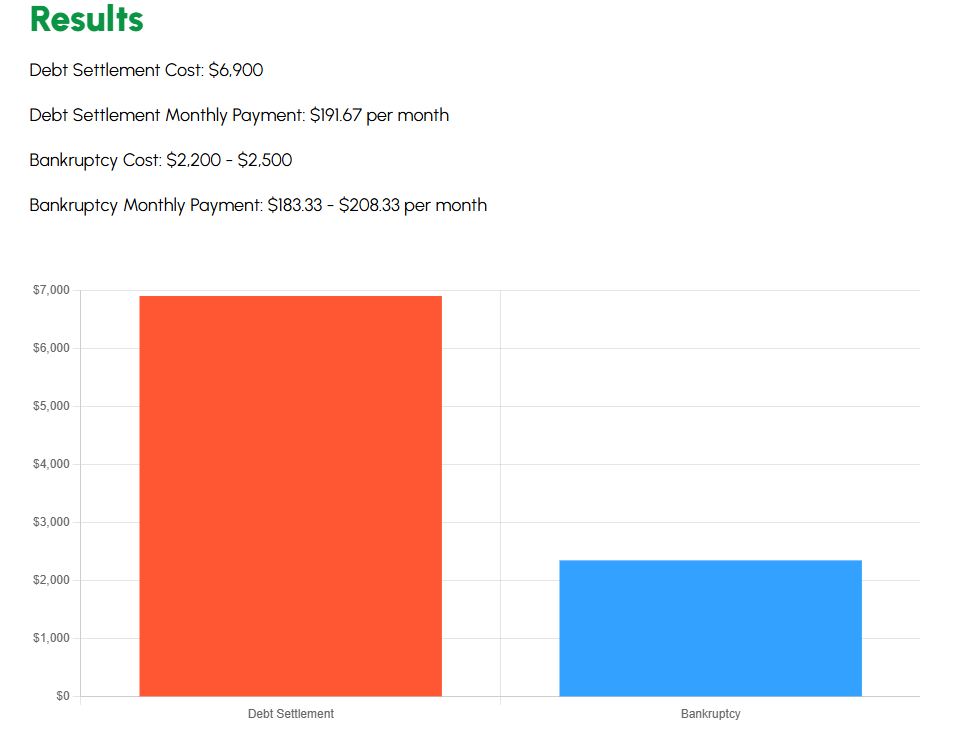
When Roger walked into our Saint Paul office, he was exhausted. The 68-year-old retiree had been making $191.67 monthly payments to National Debt Relief for six months — and still owed nearly all of his original $11,500 in credit card debt. With only $2,250 coming in each month from Social Security and $1,050 going straight to rent, he had almost nothing left for groceries, gas, or emergencies.
“I thought debt settlement was my only option,” Roger told us. “I didn’t want to file bankruptcy. I thought it would ruin me.”
But after reviewing his situation, we showed Roger something surprising: Chapter 7 bankruptcy would cost him less per month, end faster, protect his property, and start rebuilding his credit immediately — not three years down the road.
Here’s exactly how it worked.
Roger’s Situation: Stuck on a Debt Settlement Treadmill
Roger’s financial picture was straightforward but tight:
- Monthly income: $2,250 (Social Security)
- Monthly rent: $1,050
- Credit card debt: $11,500 across three cards
- Other assets: A paid-off ATV he used for hunting trips and a small collection of hunting rifles passed down from his father
After paying rent and utilities, Roger had about $900 left each month for food, transportation, and his debt settlement payment. The $191.67 he was sending to National Debt Relief felt manageable at first — but six months in, he realized the math wasn’t working.
The Problem with Debt Settlement
National Debt Relief’s plan stretched over 36 months. Roger would pay a total of $6,900 ($191.67 × 36 months) — and that money didn’t even go directly to his creditors. It sat in an escrow account while the company tried to negotiate settlements.
Meanwhile:
- His credit cards were still charging interest and late fees
- His credit score kept dropping as accounts fell further behind
- Creditors kept calling, and one threatened to sue
- He had no guarantee the settlements would actually work
Most importantly: Roger would still owe taxes on any forgiven debt. If National Debt Relief negotiated away $4,000, the IRS would treat that as taxable income — a bill Roger couldn’t afford.
The Chapter 7 Solution: Faster, Cheaper, and Complete
We walked Roger through a different path: Chapter 7 bankruptcy.
Here’s what it looked like:
The Numbers
- Total cost with Walker & Walker: $2,070 (attorney fees + filing fee)
- Payment plan: $115 per month for 18 months
- Time to discharge: 90–120 days after filing
- Money upfront: $0
Roger would pay $76.67 less per month than National Debt Relief — and finish paying in half the time. Even better, his debt would be completely discharged within four months, not dragged out for three years.
What We Protected
Roger worried about losing his ATV and rifles. Under Minnesota’s bankruptcy exemptions, we were able to protect:
- All of his hunting rifles (firearms used for hunting are covered under Minnesota’s tools of trade and household goods exemptions)
- His ATV (personal property exemption of $12,275 in Minnesota easily covered the ATV’s value)
- His Social Security income (100% protected and not counted for bankruptcy eligibility)
Nothing was taken. Nothing was sold. Roger kept the things that mattered to him.
No Money Upfront = Immediate Relief
One of the biggest advantages: we filed Roger’s case with $0 down.
The moment we filed, the automatic stay went into effect. Creditor calls stopped. Collection letters stopped. The lawsuits threatening to freeze his bank account stopped. Roger had breathing room — immediately — while he made affordable monthly payments to us.
Compare that to debt settlement, where Roger had already paid over $1,150 and still had zero protection from creditors.
The Credit Score Reality: Bankruptcy vs. Debt Settlement
Roger believed bankruptcy would “ruin” his credit. But the truth surprised him.
What Actually Happens with Debt Settlement
When you stop paying creditors and enter a debt settlement program:
- Accounts are marked “120+ days late” or “charged off”
- Your credit score drops sharply — often 100+ points
- Negative marks stay on your report for 7 years
- Settled accounts still show as “settled for less than owed” (a red flag to lenders)
- You don’t start rebuilding until settlements are complete — 3 years later in Roger’s case
What Actually Happens with Chapter 7 Bankruptcy
- Yes, bankruptcy appears on your credit report for up to 10 years
- But your debts show “$0 balance owed” immediately after discharge
- You can start rebuilding credit right away with secured cards, on-time rent payments, and responsible habits
- Many of our clients see credit scores in the mid-600s within 12–18 months
Roger’s credit was already damaged from missed payments before debt settlement. Chapter 7 gave him a clean slate to rebuild from — not three years from now, but starting on day one.
Studies have shown that bankruptcy can actually be less damaging to long-term credit health than drawn-out settlement plans. Roger wasn’t starting from scratch — he was starting fresh.
The Timeline: How It All Played Out
Here’s what Roger’s Chapter 7 case looked like from start to finish:
- Free consultation (Week 1): We reviewed his income, debts, and assets and confirmed Chapter 7 was the right fit.
- Case preparation (Week 2): We gathered documents, completed his bankruptcy petition, and set up his $115/month payment plan.
- Filing (Week 2): We filed his case with $0 upfront. The automatic stay took effect immediately — creditor calls stopped that same day.
- 341 Meeting (Week 3): Roger attended a short meeting with the bankruptcy trustee. It lasted about 10 minutes. No creditors showed up.
- Discharge (Week 13): Roger’s $11,500 in credit card debt was completely wiped out.
- Final payment (Month 18): Roger made his last $115 payment to us — and walked away debt-free.
Total time to relief: 2 weeks because the relief starts upon filing, not discharge.
Total time to pay off: 18 months
Total savings vs. National Debt Relief: $4,830
Why Chapter 7 Made Sense for Roger
Not everyone qualifies for Chapter 7, but Roger’s situation was a textbook fit:
- His income was below Minnesota’s median (Social Security alone put him well under the threshold)
- His debt was unsecured (credit cards — no mortgages or car loans)
- He had modest assets that fit comfortably within Minnesota’s exemptions
- He needed relief fast, not years from now
If Roger had tried to keep up with debt settlement for three more years, he would have:
- Paid $4,830 more
- Lived under constant creditor pressure
- Had no guarantee of success
- Still owed taxes on forgiven debt
- Delayed rebuilding his credit by 36 months
Chapter 7 bankruptcy gave him certainty, protection, and a faster path forward.
What Roger Told Us After His Discharge
“I wish I’d done this six months ago,” Roger said when his discharge came through. “I thought bankruptcy was the end. It was actually the beginning of getting my life back.”
He’s now focused on rebuilding his credit, enjoying his weekend hunting trips without financial stress, and living on his fixed income without the weight of $11,500 in debt hanging over him.
Bankruptcy wasn’t a failure. It was a tool — and the right one for his situation.
Could Chapter 7 Work for You?
If you’re in a situation like Roger’s — living on a fixed income, overwhelmed by credit card debt, and considering debt settlement — it’s worth asking: Is there a better way?
If you are on the fence between bankruptcy and debt settlement, then visit our calculator and see for yourself how much each option will cost.
At Walker & Walker, we’ve helped hundreds of Minnesotans compare their options and choose the path that actually works. We don’t pressure, and we don’t sugarcoat. We’ll tell you honestly whether Chapter 7, Chapter 13, or another option makes the most sense.
And if bankruptcy is the right choice, we’ll file your case with no money upfront — just like we did for Roger — so you get relief immediately, not years from now.
You don’t have to stay stuck. Call Walker & Walker Law Offices today for a free consultation. Let’s talk about what’s actually possible — and what it will really cost.
Because sometimes, the thing you’re most afraid of is exactly what sets you free.